
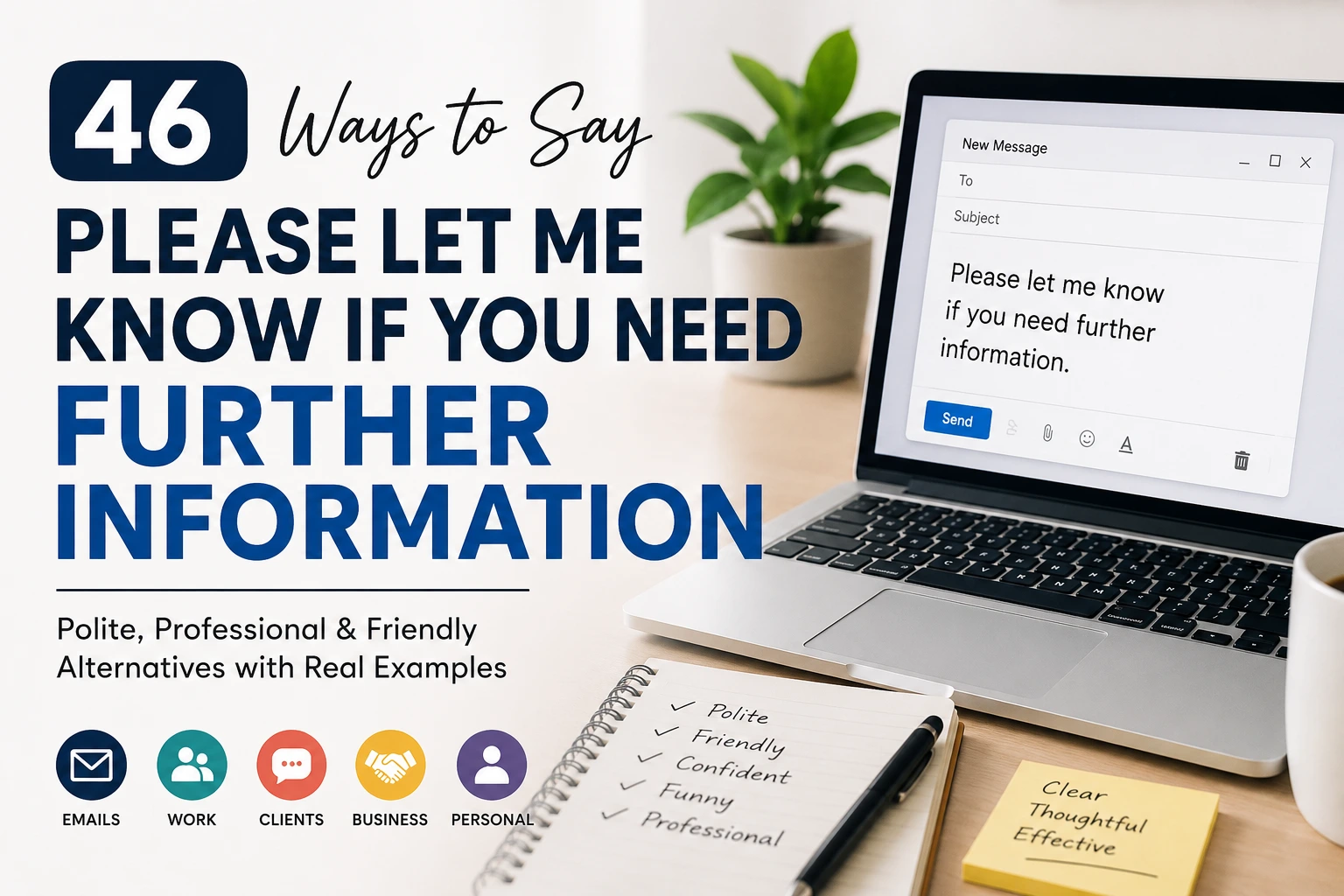
Have you ever stared at the end of an email wondering if you should write, “Please let me know if you need further information” one more time? It’s one of the most common closing lines in professional communication, but using it repeatedly can make your emails feel predictable and less personal.
Whether you’re applying for a job, responding to a client, emailing a professor, or following up with a customer, choosing the right words can leave a stronger impression. A thoughtful closing shows you’re approachable, professional, and genuinely willing to help.
The good news is that there are many natural alternatives that fit different situations. Some sound warm and friendly, while others are more formal or confident. In this guide, you’ll discover 46 effective ways to say “please let me know if you need further information,” along with practical examples that show exactly when to use each one.
What Does “Please Let Me Know If You Need Further Information” Mean?
The phrase “Please let me know if you need further information” is a polite invitation for someone to ask questions or request additional details. It tells the other person that you’re available to help and willing to provide more information if necessary.
People commonly use this phrase in professional emails, business proposals, customer support messages, school assignments, and job applications. It reassures the reader that the conversation doesn’t have to end there if they need clarification.
For example, after sending a project proposal to a client, you might write:
“Please let me know if you need further information or supporting documents.”
Although this sentence is polite and widely accepted, using different alternatives can make your communication sound fresher, more natural, and better suited to the situation.
Polite and Appreciative Ways to Say “Please Let Me Know If You Need Further Information”
1. Reply: “Feel free to reach out if you have any questions.”
Example:
After sending a project update to your manager, you end the email by saying, “Feel free to reach out if you have any questions.” It lets them know you’re available without sounding too formal.
2. Reply: “I’m happy to provide any additional details.”
Example:
You send a business proposal to a potential client and add this sentence to show you’re ready to explain anything they need before making a decision.
3. Reply: “Don’t hesitate to contact me if anything needs clarification.”
Example:
A professor receives your assignment. You include this line to let them know you’re available if any part of your work requires explanation.
4. Reply: “Please let me know if I can assist further.”
Example:
After helping a customer resolve an issue, you finish your message with this phrase to leave the conversation on a helpful note.
5. Reply: “I’m here if you need anything else.”
Example:
A coworker thanks you for helping with a presentation. You reply, “I’m here if you need anything else,” to show your continued support.
6. Reply: “I’d be glad to answer any additional questions.”
Example:
You send pricing information to a new client and invite them to ask for more details before making a final decision.
7. Reply: “Please feel free to ask if anything is unclear.”
Example:
You share instructions with your team for a new project. This sentence encourages everyone to ask questions if they need clarification.
8. Reply: “Let me know if you’d like more information.”
Example:
You recommend a software tool to a colleague. They seem interested, so you offer to share more information if needed.
9. Reply: “I’m always happy to help.”
Example:
A new employee asks you about company procedures. After answering their questions, you remind them you’re always happy to help in the future.
More Polite and Warm Alternatives
10. Reply: “If there’s anything else you need, just let me know.”
Example:
You finish assisting a customer with an order and reassure them that you’re available if any other questions come up.
11. Reply: “Please don’t hesitate to get in touch.”
Example:
After sending requested documents to a recruiter, you include this line to keep the communication open.
12. Reply: “I’d be happy to explain anything in more detail.”
Example:
You present a proposal during a meeting and offer to explain any section that needs further discussion.
13. Reply: “Thank you, and please reach out anytime.”
Example:
You welcome a new client and end your email by thanking them while encouraging future questions.
14. Reply: “I’m available if you’d like to discuss this further.”
Example:
You send performance feedback to a teammate and let them know you’re available to continue the conversation.
15. Reply: “Let me know how I can help.”
Example:
A coworker is preparing for an important presentation. You offer your assistance in case they need another opinion.
16. Reply: “I’d love to help if you need anything else.”
Example:
Your friend is planning an event. After sharing a few ideas, you let them know you’re happy to help with anything else.
17. Reply: “I’m just an email away.”
Example:
You finish answering a client’s questions and remind them they can contact you anytime if something else comes up.
18. Reply: “Please keep me posted if you need more information.”
Example:
You send research findings to your supervisor and invite them to request any additional documents if necessary.
Flirty and Playful Ways to Say “Please Let Me Know If You Need Further Information”
These alternatives are best for lighthearted conversations, texting, or chatting with someone you know well. They add personality while still showing you’re open to continuing the conversation.
19. Reply: “Just ask. I don’t bite.”
Example:
Your crush thanks you for explaining something. You smile and reply, “Just ask. I don’t bite,” to keep the conversation fun and relaxed.
20. Reply: “I’m always up for another question.”
Example:
A friend says they’ll message you later if they get confused. You answer, “I’m always up for another question.”
21. Reply: “I’d love to tell you more.”
Example:
Someone asks about your favorite vacation spot. You reply, “I’d love to tell you more if you’re curious.”
22. Reply: “Ask away whenever you want.”
Example:
You’re chatting with someone new who seems interested in your hobbies. You invite them to keep asking questions.
23. Reply: “You’ve got my attention.”
Example:
Someone says they might have more questions later. You answer, “You’ve got my attention,” in a playful tone.
24. Reply: “Now you’ve made me curious too.”
Example:
A friend hints they may ask more about your story later. You respond with this line to keep the conversation going.
25. Reply: “I’m all ears.”
Example:
During a casual text conversation, your friend says they still have something to ask. You reply, “I’m all ears.”
26. Reply: “You know where to find me.”
Example:
After helping someone with a problem, you finish by saying, “You know where to find me if you need anything else.”
27. Reply: “The conversation doesn’t have to end here.”
Example:
You’re enjoying a chat with someone and want to encourage them to continue talking without sounding too serious.
Confident and Self Respect Ways to Say “Please Let Me Know If You Need Further Information”
These responses sound professional while showing confidence. They make it clear you’re willing to help without appearing overly eager.
28. Reply: “I’ll be happy to answer any reasonable questions.”
Example:
You send a proposal to a client and confidently let them know you’re available for any genuine questions.
29. Reply: “I’m available if additional details are required.”
Example:
You submit a report to your manager and professionally offer further clarification if needed.
30. Reply: “Reach out if you need anything specific.”
Example:
After sharing product information with a customer, you encourage them to ask about anything specific rather than everything.
31. Reply: “I’ll gladly clarify anything important.”
Example:
You finish a presentation by assuring your audience that you’ll explain any key points if necessary.
32. Reply: “Let me know if further clarification would be helpful.”
Example:
Your professor reviews your research paper. You offer to explain any section that needs more detail.
33. Reply: “I’m available should you require additional information.”
Example:
This works well in formal business emails and job applications where you want to sound polished and professional.
34. Reply: “Please reach out if you need further assistance.”
Example:
A customer thanks you for solving an issue. You let them know you’re available if another problem arises.
35. Reply: “I’ll provide any details needed.”
Example:
You send a project summary and reassure your team that you’re prepared to answer any follow up questions.
36. Reply: “I’m happy to continue the conversation.”
Example:
After a productive meeting, you let your client know the discussion can continue whenever they need more information.
Funny and Savage Ways to Say “Please Let Me Know If You Need Further Information”
These alternatives are meant for friends or informal conversations. Avoid using them in professional emails.
37. Reply: “Questions are free. Answers may cost snacks.”
Example:
Your friend keeps asking for advice. You joke, “Questions are free. Answers may cost snacks.”
38. Reply: “I’ve got answers waiting for you.”
Example:
Someone says they’ll ask you later. You confidently reply with this playful line.
39. Reply: “Don’t make me keep all this knowledge to myself.”
Example:
Your classmate thanks you for explaining a lesson. You laugh and say this to lighten the mood.
40. Reply: “I’m basically customer support at this point.”
Example:
After helping your friends all day, you jokingly compare yourself to a customer service representative.
41. Reply: “Ask now before I forget everything.”
Example:
A friend says they’ll ask you tomorrow. You jokingly encourage them to ask immediately.
42. Reply: “I promise my next answer comes with fewer confusing words.”
Example:
You realize your last explanation was too complicated, so you make everyone laugh with this reply.
43. Reply: “I’ve already done the hard part. Just ask.”
Example:
You finish explaining a complicated topic and jokingly encourage your coworker to ask follow up questions.
44. Reply: “My inbox isn’t as scary as it looks.”
Example:
A colleague apologizes for sending another email. You reassure them with this lighthearted response.
45. Reply: “I accept follow up questions as payment.”
Example:
Your friend thanks you for your help. You jokingly say you’ll accept more questions instead of payment.
46. Reply: “No question is too small unless it’s about what I had for breakfast.”
Example:
A friend hesitates to ask another question. You use this humorous reply to make them feel comfortable asking anything.
Real Life Situations and the Best Reply
When your crush says it
Situation: You explain something and your crush says, “Let me know if you need more information.”
Best reply: “I might need more information just to keep talking to you.”
This keeps the conversation playful without sounding too serious.
When a friend jokes about it
Situation: Your friend sends a long message and adds, “Let me know if you need further information.”
Best reply: “I think I need a user manual for this conversation.”
A funny response works better than a formal one.
When someone says it too early
Situation: You just started chatting and they immediately offer to provide more details.
Best reply: “Let’s start with the basics first.”
This keeps the conversation balanced and natural.
When you’re not interested
Situation: Someone keeps trying to continue the conversation, but you want to end it politely.
Best reply: “Thanks, I have everything I need for now.”
It’s respectful and doesn’t invite further discussion.
When a coworker says it
Situation: A teammate sends project details and asks if you need anything else.
Best reply: “This is very clear, thank you. I’ll reach out if anything comes up.”
Professional, appreciative, and concise.
What to Avoid
Even a good phrase can sound awkward if it’s used the wrong way. Here are some common mistakes.
1. Sounding overly formal in casual conversations
Avoid: “Should you require any additional information, please advise.”
With friends or coworkers, this can feel stiff and unnatural.
2. Repeating the same phrase in every email
If every message ends with “Please let me know if you need further information,” your communication may start to feel robotic.
3. Offering help you can’t actually provide
Don’t say you’re available anytime if you know you won’t respond quickly. Be realistic.
4. Writing long, complicated closings
Keep it simple. A short sentence is usually more effective than a paragraph of polite filler.
5. Using jokes in professional situations
Replies like “Questions are free, answers cost coffee” are great for friends, but not for clients, professors, or recruiters.
Pro Tips
Match the tone of the conversation
If the other person is formal, stay professional. If they’re friendly and relaxed, you can use a warmer alternative.
Confidence beats excessive politeness
“I’m happy to provide additional details” sounds stronger than “I’m so sorry to bother you, but please let me know if you need anything at all.”
Use timing to your advantage
In follow up emails, a concise line works best. In ongoing conversations, a more personal phrase can help build rapport.
Conclusion
Finding better ways to say “please let me know if you need further information” isn’t about sounding fancy. It’s about sounding human.
The right phrase can make your email feel warmer, your message more confident, and your conversation more natural. Whether you’re writing to a client, a recruiter, a coworker, a friend, or someone you’re interested in, choose a response that matches the relationship and the moment.
You don’t need complicated language to communicate well. A simple, genuine sentence is often the most powerful choice.
Discover more
professional synonyms for nice to have