
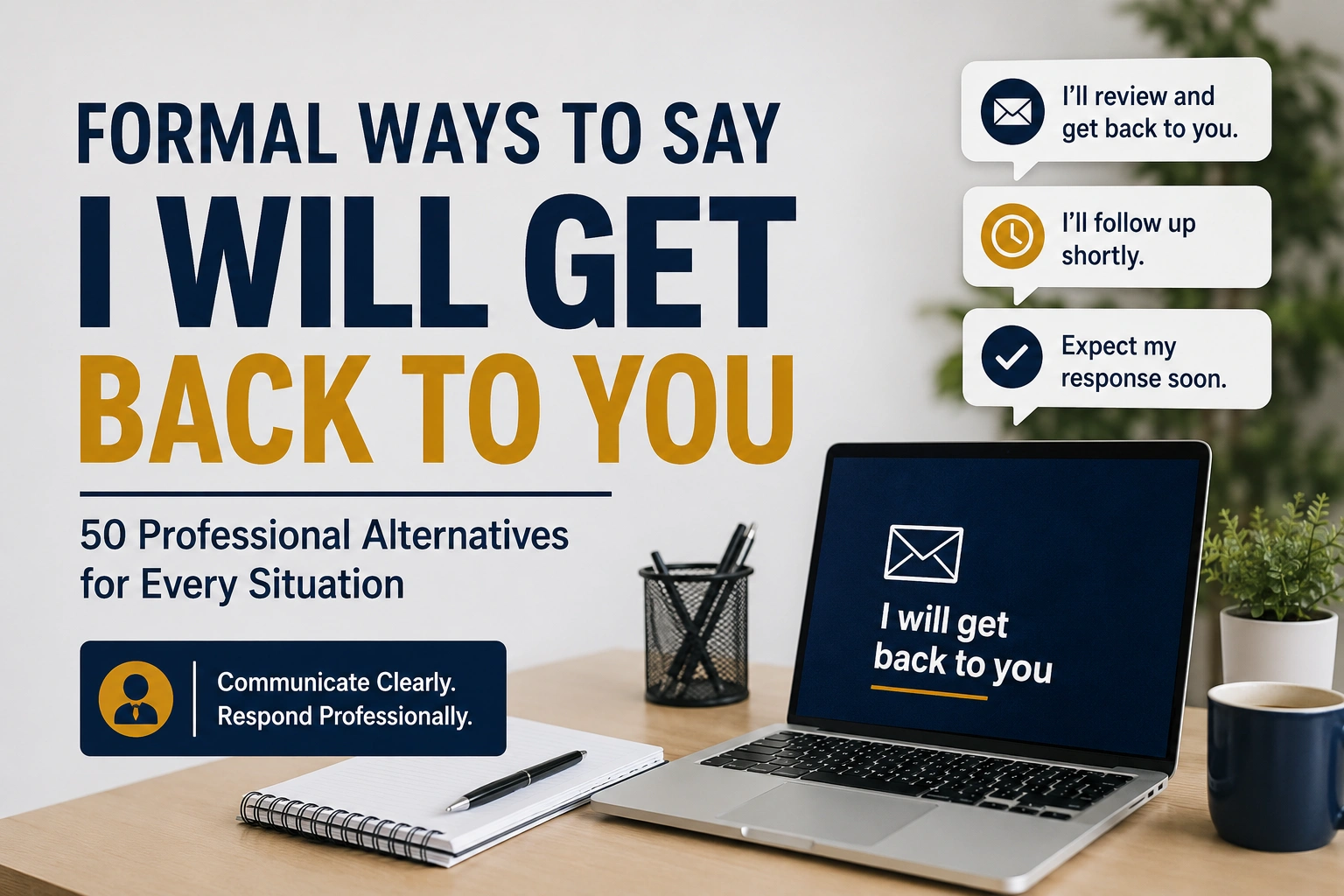
Have you ever received an email that needed a thoughtful response, but you weren’t ready to answer right away? Maybe your manager asked for an update during a meeting, a client requested more information, or a colleague needed your opinion on an important decision. In situations like these, saying “I will get back to you” is perfectly acceptable. However, using the same phrase repeatedly can make your communication sound repetitive or less polished.
That’s why many people search for formal ways to say “I will get back to you.” A more professional alternative can help you sound confident, respectful, and organized while reassuring the other person that their request matters. Whether you’re writing a business email, replying to a customer, communicating with coworkers, or speaking during an interview, choosing the right words leaves a positive impression. In this guide, you’ll discover 50 professional alternatives, complete with realistic examples, practical situations, common mistakes to avoid, and expert communication tips.
What Does “Formal Ways to Say I Will Get Back to You” Mean?
The phrase “I will get back to you” simply means that you cannot provide an answer immediately but intend to respond later.
People often use this expression when they need extra time to review information, verify facts, consult someone else, or carefully think through their response.
While the phrase itself is polite, professional settings often call for language that sounds more refined. Using a formal alternative demonstrates professionalism, respect, and reliability. It reassures the other person that you haven’t forgotten their request and that you’ll respond once you have accurate information.
For example, instead of saying:
“I’ll get back to you.”
You could say:
“I’ll review the details and provide an update shortly.”
The meaning stays the same, but the wording sounds much more professional.
50 Best Formal Ways to Say I Will Get Back to You
Polite and Professional Responses
Reply: “I’ll review the information and respond shortly.”
Example:
Your manager sends you a proposal for approval.
You reply, “I’ll review the information and respond shortly so I can give you accurate feedback.”
Reply: “I’ll follow up with you as soon as possible.”
Example:
A client emails asking about the status of their order.
You respond, “I’ll follow up with you as soon as possible after checking with our logistics team.”
Reply: “Let me check the details before responding.”
Example:
A coworker asks about next month’s project schedule.
You answer, “Let me check the details before responding so I can give you the correct timeline.”
Reply: “I’ll provide an update once I have more information.”
Example:
A customer asks about a delayed shipment.
You say, “I’ll provide an update once I have more information from our shipping department.”
Reply: “I’ll look into this and get back to you.”
Example:
A teammate reports an unexpected software issue.
You respond, “I’ll look into this and get back to you later today.”
Reply: “I’ll confirm the details and let you know.”
Example:
Your supervisor asks whether you’re available for an upcoming meeting.
You reply, “I’ll confirm the details and let you know this afternoon.”
Reply: “I’ll review everything carefully before replying.”
Example:
A client sends a lengthy contract for review.
You respond, “I’ll review everything carefully before replying with my recommendations.”
Reply: “I’ll update you once I’ve completed my review.”
Example:
Your department head requests feedback on a report.
You say, “I’ll update you once I’ve completed my review.”
Reply: “Allow me some time to verify the information.”
Example:
Someone asks about a company policy during a meeting.
You answer, “Allow me some time to verify the information before I respond.”
Reply: “I’ll share my response at the earliest opportunity.”
Example:
A business partner asks for your opinion on a proposal.
You reply, “I’ll share my response at the earliest opportunity after reviewing the document.”
Appreciative and Respectful Responses
Reply: “Thank you for your patience. I’ll respond soon.”
Example:
A customer follows up on a previous inquiry.
You reply, “Thank you for your patience. I’ll respond soon with a complete update.”
Reply: “I appreciate your understanding while I review this.”
Example:
A colleague requests approval for a budget.
You answer, “I appreciate your understanding while I review this.”
Reply: “Thanks for bringing this to my attention. I’ll investigate.”
Example:
An employee reports an issue with company equipment.
You respond, “Thanks for bringing this to my attention. I’ll investigate and update you.”
Reply: “I appreciate your inquiry. I’ll follow up shortly.”
Example:
A potential customer requests product information.
You reply, “I appreciate your inquiry. I’ll follow up shortly with the details.”
Reply: “Thank you for waiting. I’ll provide an answer soon.”
Example:
Someone has been waiting for confirmation regarding an appointment.
You respond politely, “Thank you for waiting. I’ll provide an answer soon.”
Reply: “I value your patience while I gather the necessary details.”
Example:
A supplier asks whether a purchase order has been approved.
You reply, “I value your patience while I gather the necessary details.”
Reply: “I’ll make this a priority and update you.”
Example:
Your manager asks about an urgent client request.
You answer, “I’ll make this a priority and update you as soon as I have the information.”
Reply: “I’ll ensure you receive a complete response.”
Example:
A client asks several technical questions during a meeting.
You respond, “I’ll ensure you receive a complete response after consulting the team.”
Reply: “I’ll reach out once everything has been confirmed.”
Example:
A vendor asks if the agreement has been finalized.
You reply, “I’ll reach out once everything has been confirmed.”
Reply: “Thank you for giving me time to review this.”
Example:
A client understands that you need additional time before making a recommendation.
You respond, “Thank you for giving me time to review this. I’ll reply shortly.”
Confident and Professional Responses
Reply: “I’ll have an answer for you shortly.”
Example:
A recruiter asks if you’re available for an interview next week.
You reply, “I’ll have an answer for you shortly after checking my schedule.”
Reply: “I’ll return with a complete update.”
Example:
Your project team asks for the latest progress.
You respond, “I’ll return with a complete update after speaking with the development team.”
Reply: “I’ll review the matter thoroughly.”
Example:
A department manager requests your opinion on a proposal.
You answer, “I’ll review the matter thoroughly before sharing my recommendation.”
Reply: “I’ll get the necessary information first.”
Example:
A customer asks about a feature you’re not completely sure about.
You reply, “I’ll get the necessary information first and then provide an accurate answer.”
Reply: “I’ll respond after consulting the appropriate team.”
Example:
A client asks about a technical issue that requires input from another department.
You respond, “I’ll respond after consulting the appropriate team.”
Confident and Professional Responses (Continued)
Reply: “I’ll verify everything before giving you an answer.”
Example:
A coworker asks whether the latest financial figures are accurate.
You reply, “I’ll verify everything before giving you an answer.”
Reply: “I’ll contact you once I have confirmation.”
Example:
A client wants to know if their booking has been approved.
You respond, “I’ll contact you once I have confirmation.”
Reply: “I’ll update you as soon as I receive the final details.”
Example:
Your manager asks when the new policy will be announced.
You answer, “I’ll update you as soon as I receive the final details.”
Reply: “I’ll review your request personally.”
Example:
A customer submits a special request that requires your attention.
You reply, “I’ll review your request personally and respond shortly.”
Reply: “I’ll provide a detailed response shortly.”
Example:
A colleague emails several questions about an upcoming presentation.
You answer, “I’ll provide a detailed response shortly.”
Thoughtful and Considerate Responses
Reply: “I’d like some time to consider this before responding.”
Example:
A business partner asks for your opinion on a major investment.
You reply, “I’d like some time to consider this before responding.”
Reply: “I’ll take some time to review your request.”
Example:
A customer asks for a customized service package.
You respond, “I’ll take some time to review your request.”
Reply: “I’ll carefully evaluate the information first.”
Example:
Your supervisor asks whether a proposal should be approved.
You answer, “I’ll carefully evaluate the information first.”
Reply: “I’ll revisit this and provide an update.”
Example:
A teammate asks about changing the project timeline.
You reply, “I’ll revisit this and provide an update tomorrow.”
Reply: “I’ll respond after giving this proper consideration.”
Example:
A colleague asks for your recommendation on hiring a candidate.
You answer, “I’ll respond after giving this proper consideration.”
Reply: “I’ll take a closer look before replying.”
Example:
A client points out an issue in a contract.
You respond, “I’ll take a closer look before replying.”
Reply: “I’ll examine the details and follow up.”
Example:
A customer asks why an invoice amount has changed.
You reply, “I’ll examine the details and follow up.”
Reply: “I’ll gather the necessary information first.”
Example:
Your manager requests updated sales numbers.
You answer, “I’ll gather the necessary information first.”
Reply: “I’ll revisit this once I’ve completed my review.”
Example:
A coworker asks whether a document has been approved.
You reply, “I’ll revisit this once I’ve completed my review.”
Reply: “I’ll let you know once I have a clear answer.”
Example:
A client asks if additional services can be included.
You respond, “I’ll let you know once I have a clear answer.”
Mature and Business Friendly Responses
Reply: “I’ll get back to you after reviewing the documentation.”
Example:
A legal consultant sends paperwork for your approval.
You answer, “I’ll get back to you after reviewing the documentation.”
Reply: “I’ll update you once my assessment is complete.”
Example:
Your supervisor asks about the quality inspection results.
You reply, “I’ll update you once my assessment is complete.”
Reply: “I’ll respond once I’ve gathered all the facts.”
Example:
A customer reports a complaint that requires investigation.
You answer, “I’ll respond once I’ve gathered all the facts.”
Reply: “I’ll review this with the team before replying.”
Example:
A client asks for a customized business solution.
You respond, “I’ll review this with the team before replying.”
Reply: “I’ll provide clarification after verifying the information.”
Example:
A colleague asks about changes to company policies.
You answer, “I’ll provide clarification after verifying the information.”
Reply: “I’ll communicate my decision after careful review.”
Example:
Your manager requests approval for a new project proposal.
You reply, “I’ll communicate my decision after careful review.”
Reply: “I’ll respond once the evaluation has been completed.”
Example:
A vendor asks whether their proposal has been accepted.
You respond, “I’ll respond once the evaluation has been completed.”
Reply: “I’ll share the outcome as soon as it’s available.”
Example:
Your client asks about the final audit results.
You answer, “I’ll share the outcome as soon as it’s available.”
Reply: “I’ll notify you once everything has been finalized.”
Example:
A customer asks when their application will be processed.
You reply, “I’ll notify you once everything has been finalized.”
Reply: “I’ll be in touch after completing the necessary review.”
Example:
A business associate asks for your final decision.
You respond, “I’ll be in touch after completing the necessary review.”
Real Life Situations
When Your Boss Asks for an Immediate Answer
Sometimes your manager asks a question during a meeting, but you don’t have all the facts yet. Instead of guessing, it’s better to promise a thoughtful follow up.
Best Reply:
“I’ll review the information and provide an update shortly.”
When a Client Requests More Details
Clients appreciate honesty more than rushed answers. If you need to verify information, let them know professionally.
Best Reply:
“I’ll gather the necessary information and follow up as soon as possible.”
When a Colleague Needs Your Decision
A coworker may ask for your opinion before you’ve had time to review everything.
Best Reply:
“I’ll review the matter carefully before giving you my recommendation.”
When You’re Waiting for Someone Else’s Input
Sometimes your response depends on another department or team.
Best Reply:
“I’ll respond once I’ve received confirmation from the appropriate team.”
When You Need More Time to Think
Not every decision should be made immediately. Taking time often leads to better outcomes.
Best Reply:
“I’d like some time to consider this before responding.”
Common Mistakes to Avoid
Promising a Reply Without Following Up
If you say you’ll get back to someone, make sure you actually do. Broken promises damage trust and professionalism.
Using Vague Timeframes
Saying “I’ll get back to you sometime” sounds uncertain. Whenever possible, mention a realistic timeframe.
Better Example:
“I’ll update you by tomorrow afternoon.”
Giving False Hope
Avoid saying you’ll have an answer soon if you know the process will take several days.
Overusing the Same Phrase
Repeating “I’ll get back to you” in every email can make your communication sound repetitive. Mix different professional alternatives naturally.
Responding Without Checking the Facts
Never rush to answer just to appear helpful. Taking time to verify information is always better than giving incorrect details.
Forgetting to Acknowledge the Other Person
Simple appreciation like “Thank you for your patience” makes your response feel warmer and more respectful.
Pro Tips for Sounding More Professional
Match Your Tone to the Situation
Formal business emails require polished language, while internal team conversations can be slightly more relaxed. Choose words that fit your audience.
Give a Timeframe Whenever Possible
People appreciate knowing when they can expect a response.
Instead of saying:
“I’ll get back to you.”
Say:
“I’ll send you an update by the end of the day.”
Keep Your Promise
Your words build your reputation. If you promise a follow up, make sure you deliver it on time. Reliability creates trust.
Bonus: Quick One Line Alternatives
If you need a professional response quickly, try one of these.
“I’ll follow up shortly.”
“I’ll keep you updated.”
“I’ll respond once I’ve confirmed the details.”
“I’ll review it and let you know.”
“I’ll provide an update soon.”
“I’ll look into it.”
“I’ll check and respond.”
“I’ll get back to you after reviewing everything.”
“I’ll confirm and follow up.”
“I’ll share an update as soon as possible.”
FAQs
Is “I’ll get back to you” professional?
Yes. It’s a polite and widely accepted phrase in both business and everyday conversations. However, using more formal alternatives can make your communication sound more polished.
What’s the most professional alternative?
One of the best options is:
“I’ll review the information and provide an update shortly.”
It sounds confident, respectful, and professional without being overly formal.
Should I give a deadline?
Yes. If possible, include a realistic timeframe.
For example:
“I’ll respond by tomorrow morning.”
This sets clear expectations and shows reliability.
Can I use these phrases in emails?
Absolutely. These alternatives are perfect for business emails, customer support, workplace chats, interviews, and professional meetings.
Conclusion
Knowing formal ways to say “I will get back to you” helps you communicate with greater confidence and professionalism. Instead of relying on the same phrase every time, you now have a variety of polished alternatives that fit different workplace situations, client conversations, and business emails.
The key isn’t just choosing better words. It’s following through on your promise. A thoughtful response delivered on time leaves a stronger impression than a quick reply without accurate information.
Whether you’re writing to a client, speaking with your manager, or replying to a colleague, these expressions will help you sound reliable, respectful, and confident. The right words combined with consistent follow up are what truly build trust and lasting professional relationships.
Discover more
formal synonyms for as you know