
Have you ever sent an important email and waited days for a reply? Maybe you applied for a job, reached out to a client, checked in with a coworker, or asked a professor a question. After waiting patiently, you want to send another message, but you don’t want to sound pushy or impatient. That’s where choosing the right words makes all the difference.
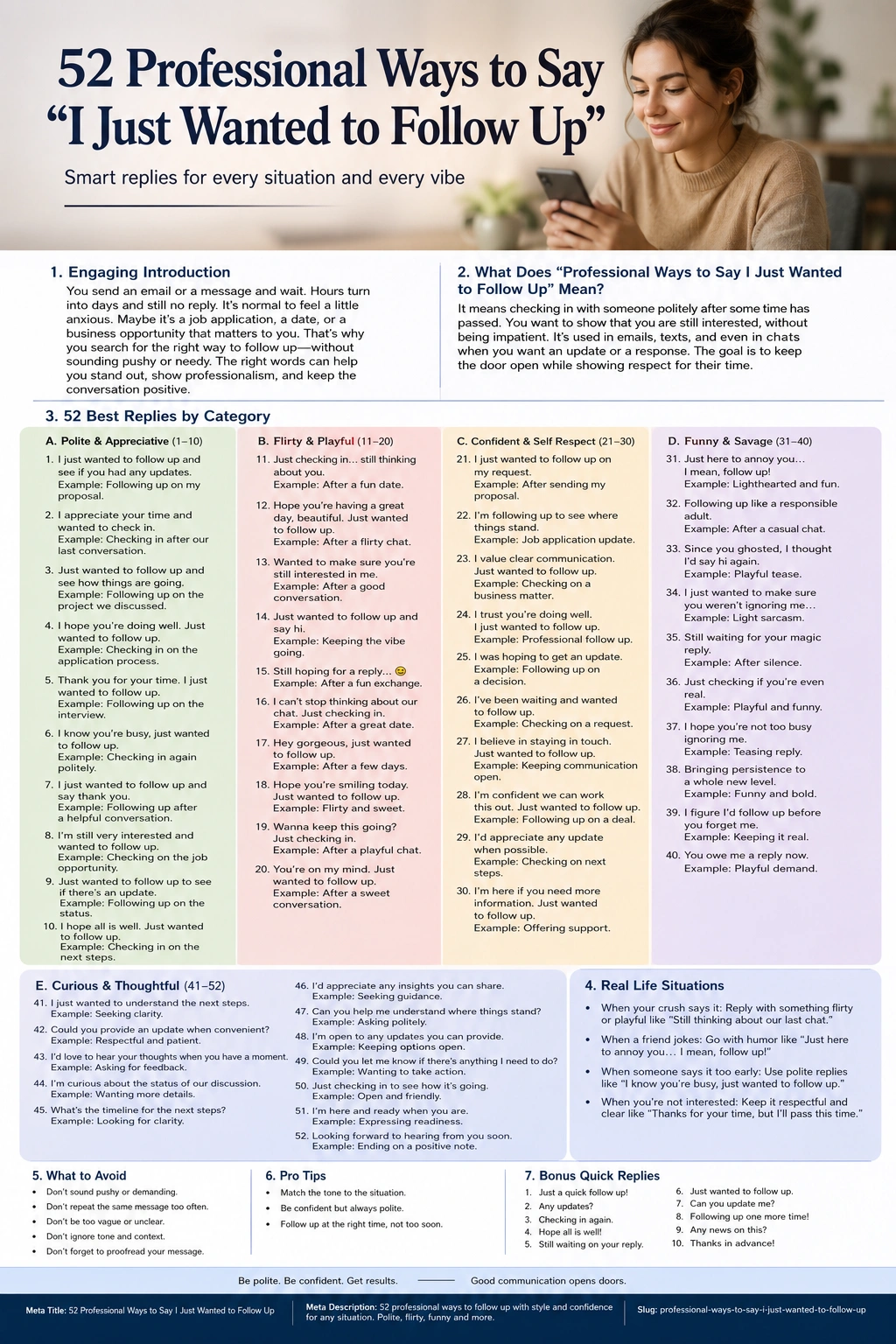
Many people search for professional ways to say “I just wanted to follow up” because they want their message to sound polite, confident, and respectful. Whether you’re writing a business email, sending a LinkedIn message, or checking on an interview, using a thoughtful alternative can leave a better impression. In this guide, you’ll discover 52 professional alternatives, each with a real-life example, so you can communicate naturally while maintaining professionalism.
What Does “Professional Ways to Say I Just Wanted to Follow Up” Mean?
The phrase “I just wanted to follow up” is commonly used when you’re checking in after a previous conversation, email, meeting, or request. It lets the other person know you’re looking for an update or gently reminding them without sounding demanding.
While there’s nothing wrong with the phrase itself, using it repeatedly can make your emails feel repetitive. Professional alternatives help your communication sound more polished, confident, and engaging.
For example, instead of writing:
“I just wanted to follow up on my previous email.”
You could say:
“I’m reaching out to check on the status of my previous email.”
The message stays polite while sounding more professional.
Polite and Appreciative Alternatives
Reply: “I’m reaching out to check on the status.”
Example:
You emailed a client last week about a proposal.
You write, “I’m reaching out to check on the status whenever you have a moment.”
Reply: “I wanted to see if there have been any updates.”
Example:
Your manager is reviewing your project request.
You send a polite message asking if there have been any updates.
Reply: “I hope you’re doing well. I wanted to check in.”
Example:
A recruiter hasn’t responded after your interview.
You begin your email with this friendly and professional sentence.
Reply: “I wanted to kindly revisit my previous email.”
Example:
A supplier hasn’t replied to your pricing request.
You politely reference your earlier message.
Reply: “I thought I’d check whether you’ve had a chance to review this.”
Example:
A client received your proposal several days ago.
You send a gentle reminder without sounding impatient.
Reply: “I’m following up regarding my earlier message.”
Example:
You contacted your professor about a recommendation letter.
A week later, you send this professional follow-up.
Reply: “I wanted to touch base regarding this matter.”
Example:
Your coworker is waiting for approval from another department.
You politely ask if there’s any progress.
Reply: “I appreciate your time and wanted to check in.”
Example:
A customer service representative promised an update.
You acknowledge their effort before asking for news.
Reply: “I wanted to see whether you needed anything else from me.”
Example:
You’ve submitted all required documents for a job application.
You check whether additional information is needed.
Reply: “I wanted to politely follow up on my request.”
Example:
You asked HR about your leave application.
A few days later, you send this courteous reminder.
Reply: “I’m checking in to see if there’s any progress.”
Example:
Your marketing team is reviewing your campaign proposal.
You ask whether any decisions have been made.
Confident and Professional Alternatives
Reply: “I’d appreciate an update when convenient.”
Example:
A client is reviewing your contract.
You write, “I’d appreciate an update when convenient.”
Reply: “I’m writing to inquire about the current status.”
Example:
Your university is processing your admission documents.
You request an update professionally.
Reply: “I wanted to reconnect regarding our previous discussion.”
Example:
You spoke with a business partner last week.
Now you’re continuing the conversation.
Reply: “I’m checking whether a decision has been made.”
Example:
You’ve interviewed for a new position and want to know if hiring has been finalized.
Reply: “I’d like to request an update on the matter.”
Example:
A vendor is preparing your customized order.
You politely ask for the latest progress.
Reply: “I’m following up to see if there are any developments.”
Example:
Your manager is waiting for executive approval.
You ask whether anything has changed.
Reply: “I wanted to revisit this conversation.”
Example:
A colleague mentioned discussing the budget later.
You continue the discussion professionally.
Reply: “I’m reaching out regarding my previous inquiry.”
Example:
You emailed customer support several days ago and haven’t received a reply.
Reply: “I wanted to see where things currently stand.”
Example:
A client is deciding between several proposals.
You politely ask about the current status.
Reply: “I’m checking in for an update at your convenience.”
Example:
A project deadline is approaching, and you’re waiting for final approval.
You ask without creating pressure.
Reply: “I wanted to see if there was any news.”
Example:
Your colleague is waiting for confirmation from another department.
You casually but professionally ask for an update.
Thoughtful and Respectful Alternatives
Reply: “I understand you’re busy, but I wanted to check in.”
Example:
Your supervisor has a full schedule, so you acknowledge that before requesting an update.
Reply: “Whenever you have a moment, I’d appreciate an update.”
Example:
A client is traveling for business.
You let them know there’s no immediate rush.
Reply: “I wanted to ensure my previous email reached you.”
Example:
You’re unsure whether your original email was delivered successfully.
You politely confirm receipt.
Reply: “I’m simply checking whether there have been any changes.”
Example:
Your loan application is still under review.
You ask if anything has changed.
Reply: “I wanted to respectfully follow up.”
Example:
A government office is processing your application.
You send a courteous reminder.
Reply: “I thought I’d circle back on this.”
Example:
You previously discussed a partnership opportunity and want to continue the conversation.
Thoughtful and Respectful Alternatives (Continued)
Reply: “I wanted to reconnect regarding this matter.”
Example:
You discussed a project timeline with your manager last week. Since the deadline is approaching, you write, “I wanted to reconnect regarding this matter.”
Reply: “I’m reaching out for a quick update.”
Example:
A supplier is preparing your order. You send a short email asking for a quick update.
Reply: “I wanted to kindly ask if there have been any developments.”
Example:
You’re waiting for approval on a grant application and politely ask if anything has changed.
Reply: “I wanted to see if you had any updates to share.”
Example:
A client is reviewing your proposal. You check whether they’ve reached a decision.
Reply: “I’m checking back regarding our previous conversation.”
Example:
You spoke with a coworker about a training session and want to know the latest status.
Business Friendly Alternatives
Reply: “I’m writing to follow up on our discussion.”
Example:
After meeting with a potential client, you send an email saying, “I’m writing to follow up on our discussion.”
Reply: “I wanted to request a brief update.”
Example:
Your manager is reviewing your promotion request. You politely ask for a status update.
Reply: “I’m reaching out regarding the next steps.”
Example:
A recruiter mentioned contacting you after interviews. You ask about the hiring process.
Reply: “I wanted to confirm whether there have been any updates.”
Example:
A vendor is processing your order, and you want to confirm the latest progress.
Reply: “I’m checking in regarding the timeline.”
Example:
A teammate is organizing an event, and you ask whether the schedule has changed.
Reply: “I wanted to inquire whether any progress has been made.”
Example:
A contractor is working on a renovation project. You ask for an update.
Reply: “I’m following up to confirm the current status.”
Example:
A customer support representative is investigating your issue. You ask whether there is any news.
Reply: “I’d appreciate any update you can provide.”
Example:
A university is reviewing your scholarship application. You politely request an update.
Reply: “I’m reaching out to see how things are progressing.”
Example:
Your team is waiting for approval from senior management. You check on the progress.
Reply: “I wanted to check whether everything is on track.”
Example:
A freelancer is working on your website, and you ask if the project is moving according to schedule.
Friendly Yet Professional Alternatives
Reply: “Just checking in to see how things are going.”
Example:
You haven’t heard from a coworker after assigning a task, so you send this friendly message.
Reply: “I hope everything is going well. I wanted to check in.”
Example:
You email a client after a busy holiday week.
Reply: “I thought I’d reach out again.”
Example:
A networking contact hasn’t replied to your previous message, so you reconnect politely.
Reply: “I wanted to touch base and see if there are any updates.”
Example:
Your colleague is coordinating a conference, and you ask for the latest information.
Reply: “I’m checking back to see whether you’ve had a chance to review this.”
Example:
You submitted a report several days ago and want to know whether it has been reviewed.
Reply: “I wanted to reconnect and continue our conversation.”
Example:
You discussed a potential partnership during a meeting and are following up afterward.
Reply: “I’m reaching out to see if you have any questions.”
Example:
You sent a proposal to a client and want to know whether they need clarification.
Reply: “I wanted to check whether I can assist with anything further.”
Example:
A customer is reviewing your quotation, and you offer additional help.
Reply: “I’m following up to make sure everything is moving forward.”
Example:
A project is nearing completion, and you want to ensure there are no delays.
Reply: “I wanted to stay in touch regarding this.”
Example:
You’re waiting for feedback from a business partner and want to keep communication open.
Real Life Situations
When Following Up After a Job Interview
It’s important to sound confident without appearing impatient.
Best Reply:
“I’m reaching out regarding the next steps in the hiring process.”
When Checking on a Client Proposal
Clients appreciate polite reminders that respect their time.
Best Reply:
“I wanted to see if you’ve had a chance to review the proposal.”
When Waiting for a Professor’s Response
Keep your message respectful and concise.
Best Reply:
“I wanted to kindly follow up on my previous email.”
When Following Up with Customer Support
A professional tone often gets better results.
Best Reply:
“I’m checking in to see if there have been any updates.”
When Waiting for Project Approval
Stay courteous while showing you’re actively engaged.
Best Reply:
“I’d appreciate an update whenever it’s convenient.”
What to Avoid
Sounding Demanding
Avoid phrases that make the other person feel pressured.
Instead of saying, “Why haven’t you replied?”
Say, “I wanted to check whether there have been any updates.”
Following Up Too Soon
Give people enough time to respond before sending another message.
Writing Long Follow Up Emails
Keep your message short, clear, and focused on the purpose.
Forgetting to Be Polite
Simple phrases like “Thank you for your time” or “I appreciate your help” make a big difference.
Using the Same Phrase Every Time
Rotate between different professional alternatives to keep your communication fresh and natural.
Pro Tips
Include Context
Remind the recipient what you’re following up about so they don’t have to search through previous emails.
Choose the Right Timing
For most professional emails, waiting two to five business days before following up is appropriate.
End with Appreciation
Closing your message with a sincere thank you leaves a positive impression and encourages a response.
Bonus Quick One Liners
I’m checking in regarding my previous email.
I’d appreciate an update when convenient.
I wanted to revisit my earlier message.
Just checking whether there are any updates.
I’m reaching out regarding our conversation.
I wanted to touch base with you.
I’m following up on my request.
I wanted to reconnect about this matter.
I’m checking back for an update.
I look forward to hearing from you.
Conclusion
Knowing professional ways to say “I just wanted to follow up” helps you communicate with confidence, courtesy, and professionalism. Whether you’re emailing a client, checking on a job application, following up with a coworker, or reaching out after a meeting, the right words can make your message feel more thoughtful and effective.
Rather than repeating the same phrase every time, choose an alternative that fits your audience and the situation. A polite follow up shows initiative without creating pressure, and it demonstrates that you value both the conversation and the other person’s time.
Discover more
formal synonyms for to answer your question