
Have you ever wanted to ask someone if they’re available but paused because you weren’t sure how to phrase it? Whether you’re scheduling a meeting with a coworker, checking in with a client, or inviting someone to chat, simply asking, “Are you free?” can sometimes feel too direct or informal. The way you ask can set the tone for the entire conversation.
That’s why many people look for more professional and natural alternatives. The right wording shows respect for the other person’s time while making your message sound polished and considerate. It also helps you communicate more confidently in emails, workplace chats, and even casual conversations.
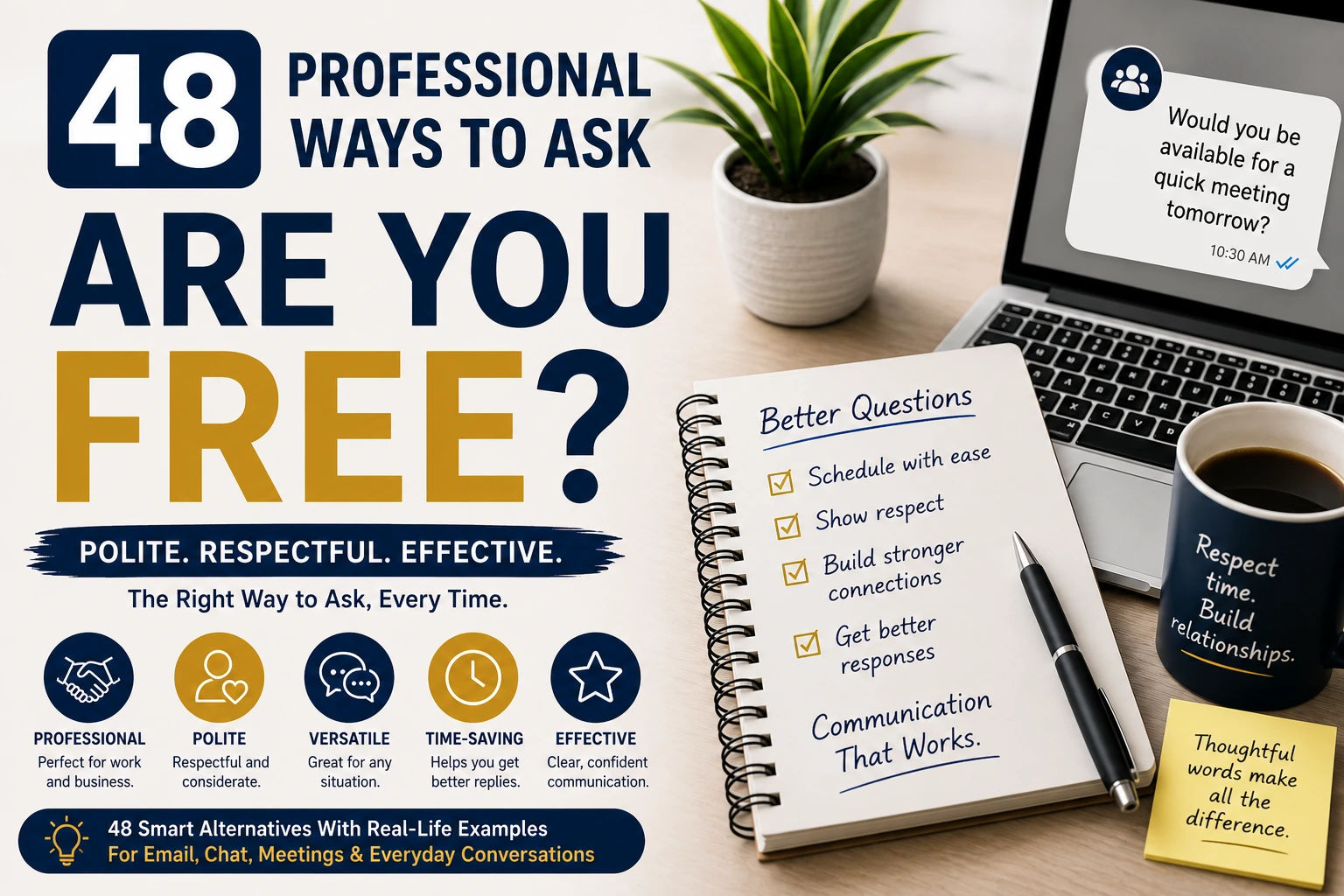
In this guide, you’ll discover 48 professional ways to ask “Are you free?” along with real life examples so you can choose the perfect phrase for every situation.
What Does “Professional Ways to Ask Are You Free” Mean?
The phrase “Are you free?” is a simple way to ask whether someone is available to talk, meet, or help with something. While it’s perfectly acceptable in casual conversations, professional settings often call for more thoughtful wording.
Using alternative expressions allows you to sound polite, respectful, and considerate of the other person’s schedule. Instead of asking directly, you can invite them to share their availability without making them feel pressured.
For example, instead of saying:
“Are you free tomorrow?”
You could say:
“Would you have some time available tomorrow afternoon?”
This small change makes your request sound warmer and more professional.
Polite and Appreciative Ways to Ask “Are You Free?”
These alternatives work well in business emails, workplace conversations, meetings, and formal communication.
1. Reply: “Would you have a few minutes to chat?”
Example:
You need to discuss a project update with your manager. You send a message asking, “Would you have a few minutes to chat this afternoon?”
2. Reply: “Are you available at your convenience?”
Example:
You want to schedule a meeting with a client. Instead of demanding a specific time, you ask if they’re available at their convenience.
3. Reply: “When would be a good time for us to talk?”
Example:
Your coworker has been busy all week. You politely ask when would be a good time to discuss the upcoming presentation.
4. Reply: “Do you have a moment to discuss something?”
Example:
You need quick feedback from your supervisor before submitting a report.
5. Reply: “Would now be a convenient time?”
Example:
You’re about to call a colleague and first send a message asking if now is a convenient time.
6. Reply: “May I borrow a few minutes of your time?”
Example:
You need advice from a senior coworker. You respectfully ask if you may borrow a few minutes of their time.
7. Reply: “Would you be available for a brief conversation?”
Example:
You want to follow up with a customer regarding their recent order.
8. Reply: “Could we schedule a quick meeting?”
Example:
You and your teammate need to finalize project details before a deadline.
9. Reply: “Please let me know when you’re available.”
Example:
You email a client and leave the timing flexible by asking them to share their availability.
10. Reply: “Do you have some time later today?”
Example:
Your manager is in meetings all morning, so you ask whether they have time later in the day.
Appreciative and Respectful Alternatives
These phrases acknowledge that the other person’s time is valuable while keeping your request friendly and professional.
11. Reply: “Whenever you have a free moment, I’d appreciate your input.”
Example:
You need feedback on a proposal but don’t want to interrupt your coworker’s busy schedule.
12. Reply: “I’d appreciate a few minutes of your time.”
Example:
You want to discuss career advice with your mentor and politely request a short conversation.
13. Reply: “Please let me know what time works best for you.”
Example:
You’re arranging a virtual meeting with a client in a different time zone.
14. Reply: “I’d love to connect when you’re available.”
Example:
You haven’t spoken with a former colleague in months and want to catch up professionally.
15. Reply: “If your schedule allows, could we talk today?”
Example:
You have an urgent but noncritical question for your supervisor.
16. Reply: “Whenever you’re free, I’d like to discuss something.”
Example:
You need to review a document with your teammate but don’t want to interrupt their work.
17. Reply: “Would you mind letting me know your availability?”
Example:
You’re organizing a meeting involving several team members.
18. Reply: “Can we find a time that suits you?”
Example:
You want to arrange a one on one discussion with a client without assuming their schedule.
19. Reply: “I’d be grateful if we could find a convenient time to talk.”
Example:
You need guidance from your department head and want your request to sound especially respectful.
20. Reply: “Please let me know when it would be convenient for you.”
Example:
You send a follow up email after a networking event and ask when it would be convenient to continue the conversation.
Flirty and Playful Ways to Ask “Are You Free?”
These alternatives are perfect for texting, casual conversations, or talking to someone you like. They sound friendly, lighthearted, and naturally inviting.
21. Reply: “Any chance I can steal a little of your time?”
Example:
You want to ask your crush out for coffee. You text, “Any chance I can steal a little of your time this weekend?”
22. Reply: “Got room in your schedule for me?”
Example:
You’ve been chatting with someone all week. You playfully ask if they have room in their schedule for you.
23. Reply: “Are you doing anything fun later?”
Example:
You’d like to spend time together after work, so you casually ask about their plans.
24. Reply: “Think you could spare me a few minutes?”
Example:
You want to call someone you’ve been talking to and ask if they have a little free time.
25. Reply: “Mind if I borrow some of your time?”
Example:
You’d like to continue an enjoyable conversation over coffee.
26. Reply: “I’d love to see you if you’re available.”
Example:
You’re planning a weekend outing and want to invite someone in a warm, sincere way.
27. Reply: “What does your schedule look like today?”
Example:
You’re hoping to meet after classes and ask about their availability.
28. Reply: “Would you be up for a quick chat?”
Example:
You haven’t spoken in a few days and want to reconnect.
29. Reply: “Can I tempt you with a coffee break?”
Example:
You invite a coworker or friend for a short coffee break during a busy afternoon.
Confident and Self Respect Ways to Ask “Are You Free?”
These alternatives sound confident and respectful. They show that you value both your own time and the other person’s schedule.
30. Reply: “Let me know if you have time to connect.”
Example:
You send a follow up message after a conference and invite further discussion.
31. Reply: “If you’re available, I’d like to discuss something.”
Example:
You need to review project updates with your manager.
32. Reply: “When your schedule opens up, let’s talk.”
Example:
Your coworker has been extremely busy all week, so you leave the timing up to them.
33. Reply: “I’d appreciate some time whenever you’re available.”
Example:
You want feedback from your mentor without creating pressure.
34. Reply: “Let’s connect when it works for both of us.”
Example:
You and a client need to arrange another meeting after a busy week.
35. Reply: “Please let me know a time that suits your schedule.”
Example:
You’re organizing a meeting with a business partner.
36. Reply: “I’m available whenever it’s convenient for you.”
Example:
You offer flexibility while arranging a consultation with a client.
37. Reply: “Would you be open to a brief conversation?”
Example:
You need approval from your supervisor before moving forward with a project.
38. Reply: “I’d welcome the opportunity to speak with you.”
Example:
You’re following up after an interview and requesting a short discussion.
Funny and Savage Ways to Ask “Are You Free?”
These alternatives are best used with friends or people who appreciate humor. Avoid using them in professional emails.
39. Reply: “Is your calendar accepting visitors today?”
Example:
Your friend has been busy for weeks, so you jokingly ask if their calendar has any free space.
40. Reply: “Should I book an appointment with your assistant?”
Example:
Your coworker has been incredibly busy, and you tease them about their packed schedule.
41. Reply: “Do I need to get on a waiting list?”
Example:
Your best friend has been hard to reach lately, so you jokingly ask if there’s a waiting list.
42. Reply: “Can I interrupt your world tour for five minutes?”
Example:
Someone has been traveling constantly, and you playfully ask for a little of their time.
43. Reply: “How many meetings do I have to survive before I get your attention?”
Example:
Your coworker has been in back to back meetings all day, so you send this humorous message.
44. Reply: “Blink twice if you’re actually free.”
Example:
A friend keeps saying they’re busy every weekend, so you jokingly send this text.
45. Reply: “Are you secretly avoiding me?”
Example:
You haven’t heard from a close friend in several days and tease them in a lighthearted way.
46. Reply: “I promise I’ll only steal five minutes.”
Example:
You need a quick opinion from a teammate before submitting a report.
47. Reply: “Tell your schedule I’m requesting visitation rights.”
Example:
Your friend has been overwhelmed with work, and you joke about finally getting some of their time.
48. Reply: “Do I need to send a calendar invite to get your attention?”
Example:
Your coworker keeps postponing your conversation, so you send this playful message to make them laugh.
Curious, Thoughtful, and Mature Ways to Ask “Are You Free?”
These alternatives are ideal when you want to sound considerate, emotionally intelligent, and respectful. They’re perfect for meaningful conversations, important discussions, or reconnecting with someone.
49. Reply: “When you have a quiet moment, I’d like to talk.”
Example:
You need to discuss a personal matter with a close friend, so you wait until they have a quiet moment.
50. Reply: “I’d love to catch up whenever you have time.”
Example:
You haven’t spoken with a former coworker in months and want to reconnect without rushing them.
51. Reply: “Would this week be a good time to connect?”
Example:
You’re arranging a networking conversation and want to give the other person flexibility.
52. Reply: “I’d appreciate the chance to speak whenever you’re available.”
Example:
You need advice from your mentor and politely ask for a conversation when their schedule allows.
53. Reply: “Is there a time that works well for you?”
Example:
You’re planning a meeting with a client and want them to choose the most convenient time.
54. Reply: “I’d enjoy talking whenever your schedule permits.”
Example:
A former colleague suggests catching up. You respond with this thoughtful invitation.
Real Life Situations and the Best Reply
When your crush seems busy
Situation:
Your crush has mentioned having a hectic week, but you’d still like to see them.
Best reply:
“Whenever you have some free time, I’d love to grab coffee with you.”
This sounds thoughtful without creating pressure.
When a friend jokes about being too busy
Situation:
Your friend says, “My calendar is completely booked.”
Best reply:
“I’ll happily wait for a VIP appointment.”
It keeps the conversation light and playful.
When someone says they’re free too early
Situation:
A new acquaintance immediately asks if you’re available to meet.
Best reply:
“Let’s get to know each other a little more first, then we can plan something.”
This sets a comfortable pace while remaining polite.
When you’re not interested
Situation:
Someone asks if you’re available to meet, but you don’t want to continue the conversation.
Best reply:
“Thank you for asking, but I’m not available at the moment.”
It’s respectful, clear, and avoids sending mixed signals.
When scheduling a business meeting
Situation:
You need to arrange a meeting with a client.
Best reply:
“Please let me know a time that works best for your schedule.”
This shows professionalism and respect for their availability.
What to Avoid
1. Being too direct
Simply asking “Are you free?” can sometimes sound abrupt in professional settings. A more thoughtful phrase feels more respectful.
2. Demanding an immediate response
Avoid phrases that pressure someone into replying right away. Give them time to check their schedule.
3. Ignoring their availability
If someone has already mentioned they’re busy, acknowledge it before asking to meet.
4. Making your request too complicated
Long messages can make scheduling feel difficult. Keep your invitation clear and concise.
5. Using overly casual language in formal situations
Expressions that work with friends may not be appropriate for clients, supervisors, or recruiters.
Pro Tips
Offer flexibility
Instead of suggesting only one specific time, invite the other person to choose what works best for them.
Respect their schedule
A simple acknowledgment that they’re busy shows professionalism and emotional intelligence.
Match your tone to the relationship
Professional conversations require polished language, while friends and family usually appreciate a more relaxed approach.
Conclusion
Knowing professional ways to ask “Are you free?” helps you communicate with confidence, courtesy, and respect. Whether you’re arranging a business meeting, catching up with a friend, or inviting someone for coffee, the right wording makes your request feel thoughtful instead of demanding.
The best phrases respect the other person’s time while keeping the conversation warm and natural. With these alternatives, you’ll be able to ask about someone’s availability in a way that fits every situation.
Sometimes, a small change in wording is all it takes to leave a lasting positive impression.
Discover more
professional ways to say i forwarded the email
formal synonyms for to answer your question
ways to say please let me know about the funeral arrangements