
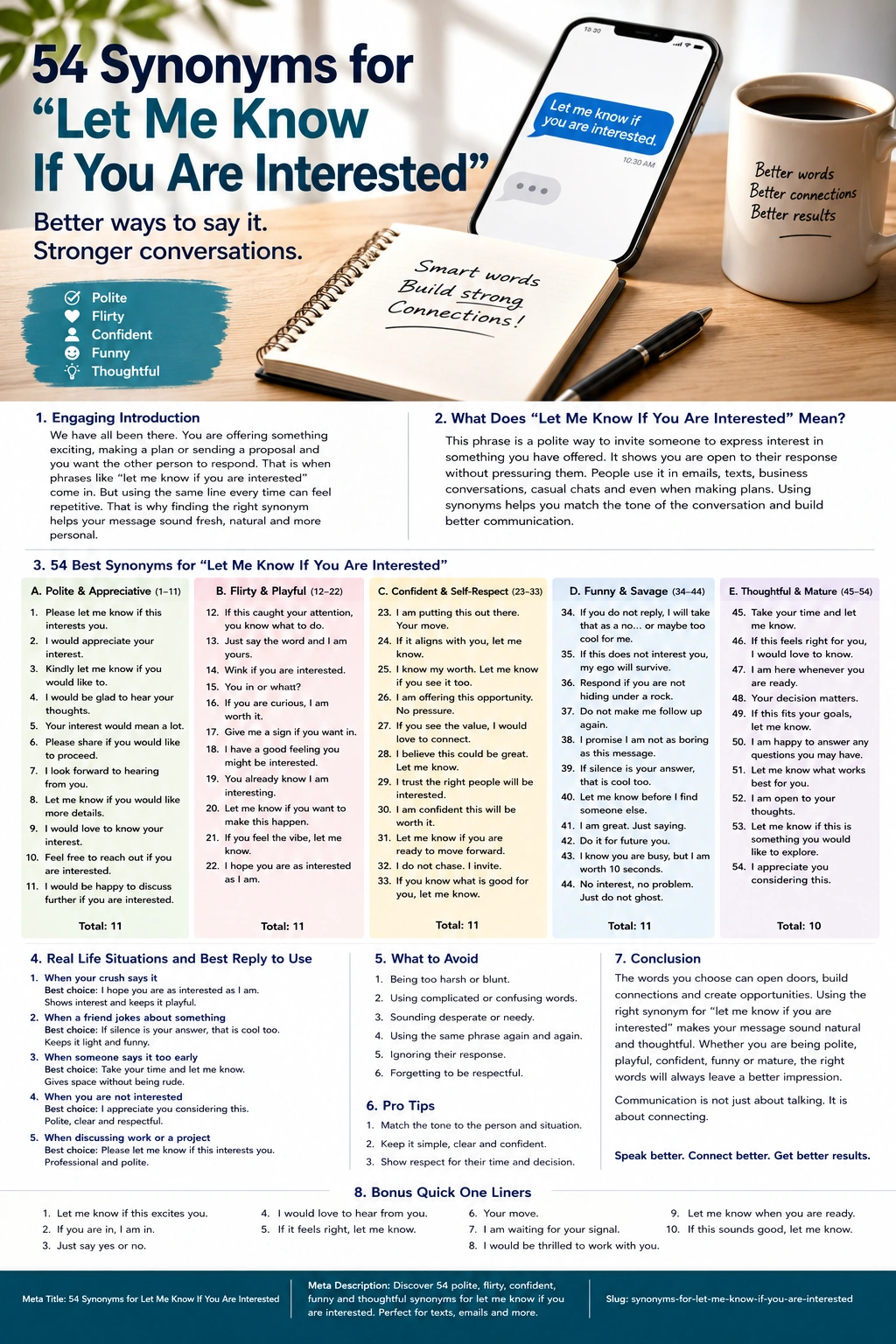
Have you ever finished writing an email, text message, or proposal and ended it with the phrase, “Let me know if you’re interested”? It’s a perfectly polite way to invite a response, but if you use it often, it can start to sound repetitive or generic. Whether you’re reaching out to a potential client, inviting someone to an event, promoting a service, or simply making plans with a friend, choosing a fresh alternative can make your message feel more engaging and professional.
That’s why many people search for synonyms for “let me know if you are interested.” The right wording can encourage a response while matching the tone of your conversation. In this guide, you’ll discover 54 natural alternatives with realistic examples so you can communicate more confidently in both professional and personal situations.
What Does “Synonyms for Let Me Know If You Are Interested” Mean?
The phrase “let me know if you are interested” is commonly used to invite someone to respond if they would like to learn more, participate, or accept an offer.
People use it in business emails, job opportunities, invitations, networking messages, sales conversations, and even casual texts with friends.
Although it’s polite and widely accepted, using the same expression repeatedly can make your communication sound predictable. Choosing different alternatives helps your writing feel more natural, professional, and engaging while still encouraging the other person to reply.
For example, instead of saying:
“Let me know if you’re interested.”
You could write:
“Feel free to reach out if you’d like more information.”
The message remains friendly while sounding more polished.
54 Synonyms for Let Me Know If You Are Interested
Polite and Appreciative Alternatives
Reply: “Feel free to reach out if you’d like more information.”
Example:
You send a client information about your services and finish the email by inviting them to ask questions.
Reply: “I’d be happy to discuss this further if it interests you.”
Example:
You introduce a business proposal during a networking event and offer to continue the conversation.
Reply: “Please don’t hesitate to contact me if you’d like to learn more.”
Example:
You email a customer after sharing details about a new product.
Reply: “I’d love to hear your thoughts if this sounds appealing.”
Example:
You invite a colleague to collaborate on a project and encourage their feedback.
Reply: “Let me know if you’d like additional details.”
Example:
You send pricing information and offer to answer any remaining questions.
Reply: “I’d be glad to answer any questions you may have.”
Example:
A potential customer receives your brochure, and you invite them to contact you.
Reply: “Please let me know if you’d like to move forward.”
Example:
A freelancer sends a proposal and politely asks the client to confirm if they’d like to begin.
Reply: “I’m available if you’d like to discuss this further.”
Example:
You finish a meeting by letting the client know you’re available for follow-up questions.
Reply: “I’d appreciate hearing from you if this is of interest.”
Example:
You share a partnership opportunity with another company.
Reply: “Please reach out whenever you’re ready.”
Example:
You send information about a workshop and let participants decide at their own pace.
Reply: “I’d be happy to help if you’d like to explore this further.”
Example:
You recommend a software solution and offer additional guidance.
Professional and Confident Alternatives
Reply: “I look forward to hearing your thoughts.”
Example:
You send a project proposal to your manager and invite feedback.
Reply: “I’d welcome the opportunity to discuss this with you.”
Example:
You apply for a consulting project and express your interest in speaking further.
Reply: “Please let me know if you’d like to schedule a conversation.”
Example:
You email a potential client after an introductory call.
Reply: “I’m happy to provide more information upon request.”
Example:
You send product specifications to a customer.
Reply: “I’d be pleased to continue the conversation.”
Example:
A recruiter reaches out, and you invite them to discuss the position further.
Reply: “Feel free to get in touch if you’d like to proceed.”
Example:
A designer sends logo concepts and waits for the client’s decision.
Reply: “Please let me know if this aligns with your needs.”
Example:
You present a business solution during a meeting.
Reply: “I’d appreciate the opportunity to assist further.”
Example:
You complete a consultation and offer continued support.
Reply: “Let me know if you’d like to take the next step.”
Example:
A coach finishes explaining a training program and invites enrollment.
Reply: “I’d be delighted to provide additional assistance.”
Example:
A customer asks about premium services, and you offer further help.
Reply: “Please let me know if you’d like to explore this opportunity.”
Example:
You introduce a partnership idea to another organization.
Friendly and Thoughtful Alternatives
Reply: “Take your time, and let me know what you think.”
Example:
You recommend a book to a friend and encourage them to decide at their own pace.
Reply: “Whenever you’re ready, I’d love to hear from you.”
Example:
You invite someone to join your community event without any pressure.
Reply: “If this catches your interest, I’d be happy to chat.”
Example:
You tell a coworker about an upcoming conference and offer to share more details.
Reply: “Let me know if this sounds like something you’d enjoy.”
Example:
You invite friends on a weekend hiking trip.
Reply: “I’d love to hear if this is something you’d consider.”
Example:
You suggest a volunteer opportunity to a friend who enjoys community work.
Reply: “Feel free to ask if you’d like to know more.”
Example:
You mention an online course to a colleague and offer more information if they’re curious.
Friendly and Thoughtful Alternatives (Continued)
Reply: “I’d be glad to share more whenever you’re interested.”
Example:
You recommend a professional certification to a coworker and offer to explain the enrollment process.
Reply: “Let me know if you’d like to hear more about it.”
Example:
You tell a friend about a local volunteer program and offer more details.
Reply: “If you’d like to explore the idea, just let me know.”
Example:
You suggest starting a side business with a friend and invite them to discuss it.
Reply: “I’d be happy to continue the conversation.”
Example:
After a networking event, you encourage a new connection to reach out anytime.
Reply: “I’m here if you’d like to discuss it further.”
Example:
A colleague asks about your recent training course, and you offer additional guidance.
Casual and Encouraging Alternatives
Reply: “Just let me know if it sounds good to you.”
Example:
You invite your friends on a weekend road trip and wait for their decision.
Reply: “Tell me if you’d like to join.”
Example:
You’re organizing a community event and invite neighbors to participate.
Reply: “Give me a shout if you’re interested.”
Example:
You mention a local workshop to a friend during lunch.
Reply: “I’d love to have you if you’re interested.”
Example:
You invite a coworker to attend a professional conference with you.
Reply: “If it sounds like a good fit, let me know.”
Example:
You recommend a freelance opportunity to someone in your network.
Reply: “Keep me posted if you’d like to move ahead.”
Example:
A client reviews your proposal, and you leave the decision in their hands.
Reply: “Let me know whenever you’re ready.”
Example:
You send information about your coaching services and encourage a relaxed decision.
Reply: “Reach out if you’d like to make it happen.”
Example:
You discuss a collaboration idea with another business owner.
Reply: “The opportunity is there if you’d like it.”
Example:
You invite a colleague to join a mentorship program.
Reply: “I’d love to help if this interests you.”
Example:
You recommend a career development course to a recent graduate.
Creative and Modern Alternatives
Reply: “The door is always open if you’d like to explore this.”
Example:
You introduce a partnership opportunity during a networking event.
Reply: “Let’s continue the conversation whenever you’re ready.”
Example:
A client asks for time to think about your proposal, and you respond with patience.
Reply: “I’d enjoy working together if this feels right for you.”
Example:
You pitch your freelance services to a small business owner.
Reply: “I’m only a message away if you’d like more information.”
Example:
You send an email about your online course and encourage questions.
Reply: “Feel free to connect whenever you’re ready.”
Example:
You meet someone at a conference and invite them to stay in touch.
Reply: “I’d be excited to hear from you.”
Example:
You invite a potential client to discuss your consulting services.
Reply: “Take a look, and let me know your thoughts.”
Example:
You share a portfolio with a prospective employer.
Reply: “There’s no pressure, but I’d love to hear from you.”
Example:
You recommend a book club to a friend who enjoys reading.
Reply: “If you’d like to explore the possibilities, I’m here.”
Example:
You discuss expanding a business partnership with another entrepreneur.
Reply: “Whenever you’re interested, I’d be happy to help.”
Example:
You offer tutoring services to a student preparing for exams.
Reply: “I’d appreciate the chance to work with you.”
Example:
You conclude a proposal by expressing your enthusiasm for collaborating.
Real Life Situations
When Sending a Business Proposal
A professional closing encourages a response without sounding pushy.
Best Reply:
“I’d be happy to discuss this further if it interests you.”
When Inviting Someone to an Event
Keep the invitation warm and relaxed.
Best Reply:
“Let me know if this sounds like something you’d enjoy.”
When Networking on LinkedIn
Leave the conversation open while remaining professional.
Best Reply:
“I’d welcome the opportunity to continue our conversation.”
When Offering Freelance Services
Invite action without creating pressure.
Best Reply:
“Please let me know if you’d like to move forward.”
When Sharing an Opportunity With a Friend
Keep your wording friendly and supportive.
Best Reply:
“Take your time, and let me know what you think.”
What to Avoid
Sounding Too Pushy
Avoid creating pressure by demanding an immediate decision.
Using the Same Closing Every Time
Repeating one phrase in every email can make your writing feel repetitive.
Being Too Vague
Make it clear what you’re inviting the other person to do.
Forgetting Your Audience
Professional emails require different wording than casual messages to friends.
Ending Without a Call to Action
Always give readers a simple next step if you want a response.
Pro Tips
Match the Tone
Choose formal alternatives for business communication and conversational ones for personal messages.
Keep It Short
Your closing should feel natural, not like a long sales pitch.
Make Responding Easy
Invite questions or discussion so the other person feels comfortable replying.
Bonus Quick Alternatives
Feel free to reach out anytime.
I’d be happy to discuss this further.
Please let me know your thoughts.
I’m here if you’d like more information.
Let me know if you’d like to move forward.
I’d love to hear from you.
Feel free to connect anytime.
Please reach out if you have questions.
I’d be glad to help.
The opportunity is there whenever you’re ready.
Conclusion
Using different synonyms for “let me know if you are interested” helps your emails, messages, and conversations sound more natural, engaging, and professional. Whether you’re inviting someone to collaborate, presenting a business proposal, promoting a service, or simply making plans, the right closing phrase can encourage a response without sounding repetitive.
The best alternative depends on your audience and the situation. A professional email may call for polished language, while a casual conversation works better with a relaxed and friendly tone. By choosing thoughtful wording and making it easy for people to reply, you’ll create stronger connections and more meaningful conversations.
Discover more
professional synonyms for i am honored